
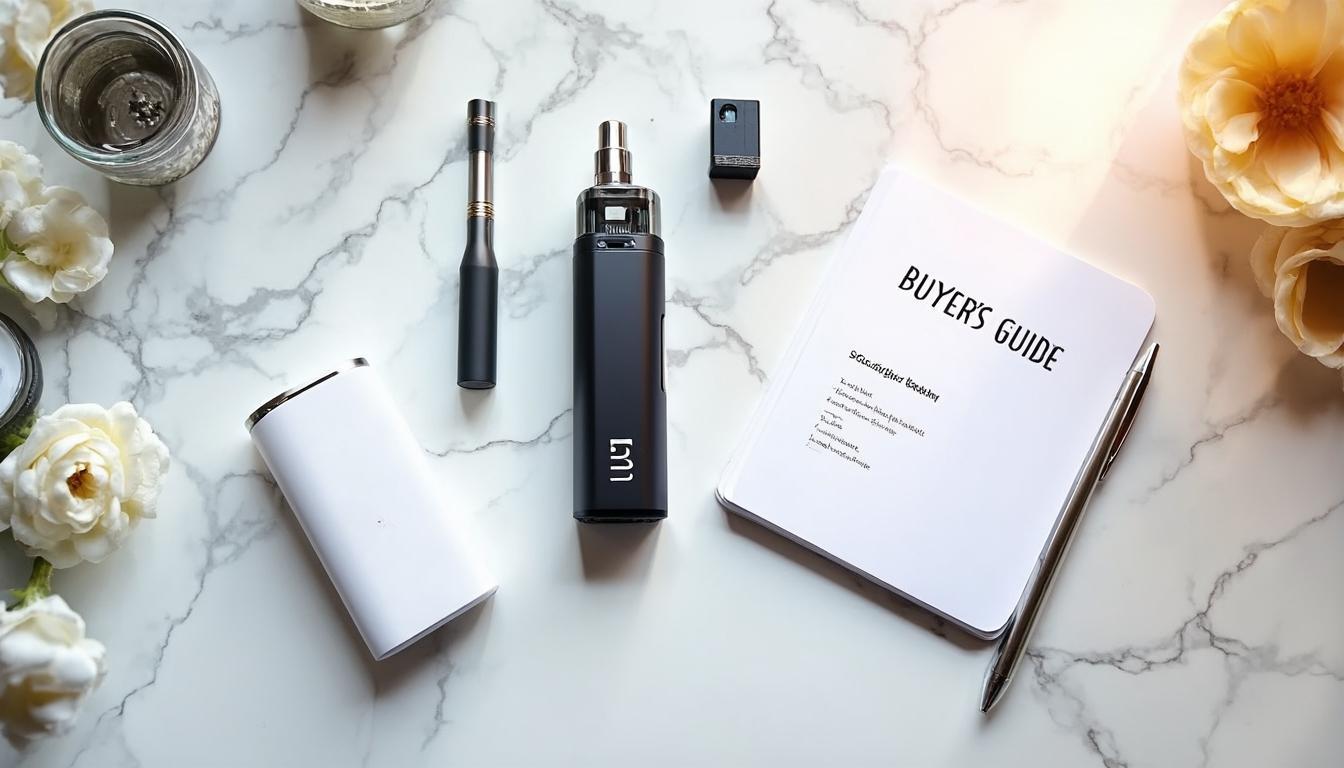

Use electronic cigarettes to quit smoking: Practical strategies for Quit Smoking, Nicotine Replacement selection and Usage Tips full analysis
If you want to truly quit smoking and stop smoking one cigarette after another, you not only need determination, but you also need to be smart and make good use of nicotine replacement tools such as e-cigarettes, coupled with scientific usage tips. Turn every thought of “wanting to take a puff” into an opportunity to completely get rid of your addiction to cigarettes.
The truth about continuous draws: It’s not just a habit, it’s a cycle of “trigger + reward”
The reason you smoke continuously is not because you have “poor willpower” but because your brain has been trained by nicotine many times. Every time you light up a cigarette, you are repeating a process: triggered by the stressful emotions, coffee and wine, and then you light up the cigarette and take a puff. Your brain receives the reward and feels relaxed. Once this cycle becomes automatic, you will chain smoke without knowing it.
If you want to quit smoking, you have to interrupt this cycle and replace your “mouth wants”, “hands want to light up” and “brain wants to relax” with new solutions. This is why smart use of nicotine replacement and usage tips can be much more effective than simply trying hard.
📊 Key Metrics Comparison
Nicotine Replacement with e-cigarette: Usage Tips for no longer smoking continuously
1. Choose the strength of nicotine first instead of just asking for “stronger””
If you are a heavy smoker, you can start with more than one pack a day of medium to high concentration nicotine and then lower it every week. For example, use a higher concentration in weeks 1-2, change to medium concentration in weeks 3-4, start with low concentration in week 5, and slowly transition to 0 mg. This way, quit smoking will be much more stable.
2. Set an upper limit for each “want to smoke”: the number of puffs rather than the number of sticks
The key to quit chain smoking with e-cigarettes is to change “smoking one” to “smoking a few puffs”. You can set usage tips like this
- Limit yourself to a maximum of 5-8 mouthfuls each time you crave.
- Put down the device for at least 30 minutes after smoking
- If you still want to smoke, do something else first, such as drinking water, walking around and stretching.
This will allow you to gradually change from “infinite continuous smoking” to “bounded use”, which can not only control nicotine but also train the brain to delay gratification.
3. Break down the “triggering scenes”: coffee, wine shop, and on the way to get off work
Continuous draws are most likely to occur in fixed scenes, so you can design exclusive usage tips for the scene.
- Only allow yourself 3-5 puffs of e-cigarettes during coffee time and drink water to slow down the pace.
- Eat something before drinking to reduce the superimposed stimulation of “fasting wine + nicotine”
- When driving or waiting for a bus, put your e-cigarette in your bag and chew sugar-free gum instead.
You will find that once the scene changes, the continuous smoking mode will be interrupted, and the process of quit smoking becomes much more controllable.
💡 Core Highlights and In-depth Analysis
01. Use “drugs + behavior” to fight on two fronts instead of relying on just one path
Both the CDC and the Mayo Clinic emphasize that the success rate of quit smoking is not high if you rely solely on willpower. You can think of e-cigarettes as a flexible nicotine replacement, combined with patches, oral tablets, or nicotine-free behavioral replacement tools such as walking, drinking water, and deep breathing. In this way, you are fighting on two lines at the same time: one line to make the brain less tortured by nicotine, and one line to retrain your life rhythm. This combination strategy has become a mainstream practice in the industry.
02. Take “wanting to smoke” as a signal rather than failure: use the Talk Back technique to counter the script in your head
A technique that is highly recommended in the industry is “listen and then refute.” When the words “I feel better now if I take a puff” or “Just one cigarette” come into your mind, write these words down in your mind or in a notebook and then give yourself a talk back, such as “Just one cigarette will overthrow all my previous efforts.” “I feel uncomfortable now because I am quitting, not because I really need to smoke.” This trick sounds simple, but it is used by front-line smoking cessation coaches because it directly hits the psychological root of chain smoking.
03. Impulse is like a wave: learn to “Ride the Wave” instead of hard-topping
The experience of many former smokers has verified that every intense craving actually only lasts a few minutes. You can “ride the wave” like a surfer. Next time you want to smoke continuously, you can say to yourself, “My heart is beating a little fast now, but it will naturally fall back in a few minutes.” At the same time, you can replace it with one or two puffs of nicotine or take a short walk. Once you have experienced it a few times, you will know that craving really “comes and goes quickly.” This will greatly enhance your confidence in quit smoking.
04. Industry Insights: Many people do not quit well but use the wrong “time point” to quit.”
Professional smoking cessation clinics found a common misunderstanding that many candidates quit smoking when the pressure is greatest, such as before the launch of the project, during the exam week, and during the intensification of family conflicts. As a result, it is naturally easier to relapse. Industry experts recommend that you enter the “preparatory period” 1-2 weeks in advance. Use e-cigarettes and other nicotine replacements first, stabilize the dose, and then choose a relatively stable time. When the official withdrawal day comes, the brain has already adapted to part of the pressure, so that the effect of usage tips will be amplified.
05. Industry Insights: Upgrading from “I want to quit smoking” to “I am a non-smoker””
Many foreign quit smoking courses will guide you to change your self-definition by saying not “I am quitting smoking” but “I am a non-smoker and now I am only using nicotine replacement to transition.” It sounds like a change of wording, but industry data has found that this type of identity change is highly correlated with long-term success rate because it will silently affect your choices in drinking, socializing, and business trips. Even if you are still using e-cigarettes or patches in the short term, your general direction is already on the “smoking-free” side.
06. Industry Insights: Data-based tracking is much better than “relying on feeling”
Many successful smokers will manage their usage as a “project”. Every day, they will record how many puffs of e-cigarettes they have taken, which nicotine replacement they have used, how many times they have experienced strong craving, and how they have overcome it. You can simply use your mobile phone memo to record it after a week. You will clearly see your progress curve. In this way, usage tips are no longer scattered tips but an action system that can be reviewed and optimized. This is exactly what professional organizations are doing, and you can definitely do it for yourself.
Continuous smoking is not your destiny. As long as you use e-cigarettes and other nicotine replacements wisely and cooperate with scientific usage tips, you can quit smoking step by step. The moment of “wanting to take a puff” becomes the starting point of your life’s counterattack. If you are ready, start designing a truly suitable smoking cessation plan for yourself from today.