
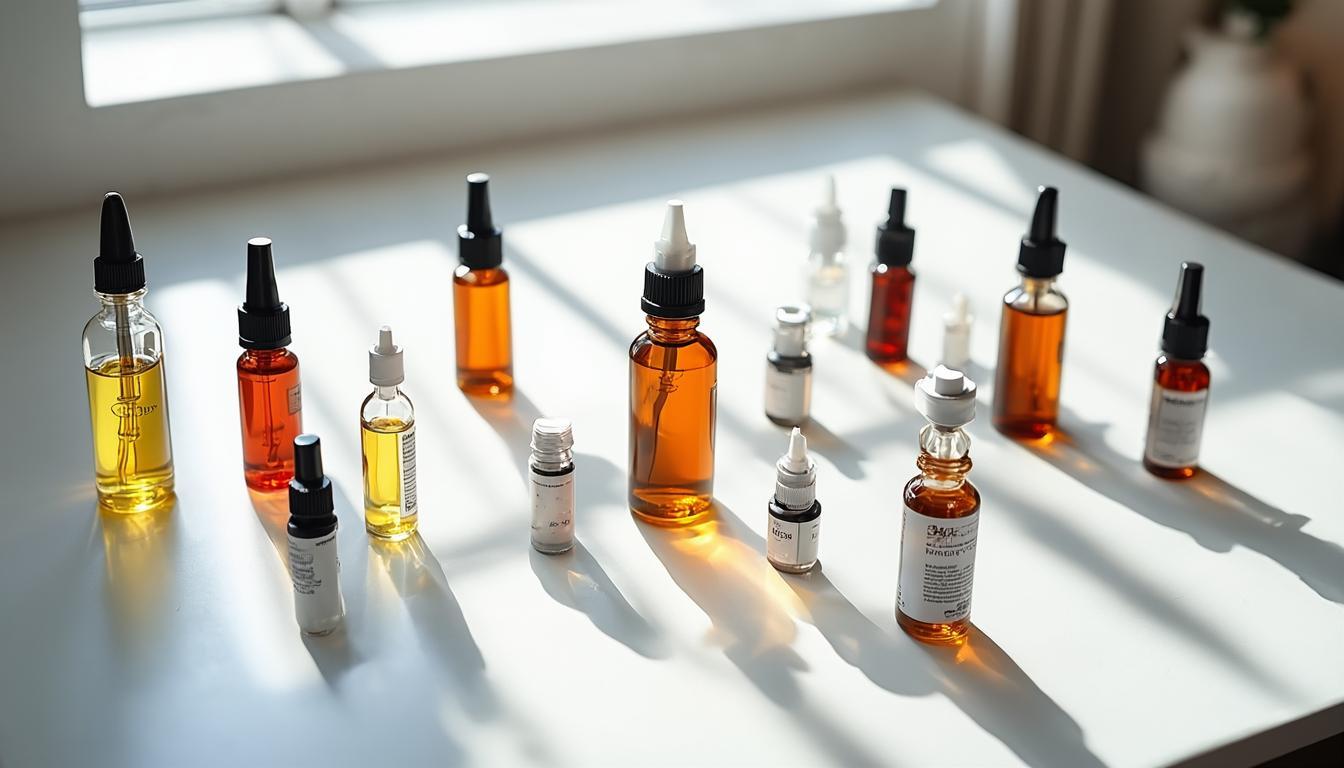

How many calories does e-liquid have? From e-liquid calories to vaping health and sugar free, a comprehensive breakdown
Many people are now concerned about weight and health and will ask whether e-liquid calories in e-cigarette oil will affect vaping health and whether it is close to sugar free. This article uses simple data to help you understand.
Where does the heat in e-cigarette liquid come from?
There are four main components of e-cigarette oil: VG, vegetable glycerin, PG, propylene glycol flavor and nicotine. Some formulas are deliberately made to be closer to sugar free without adding sucrose. Both VG and PG contain a little e-liquid calories, which is only about 4-4.2 kcal per 1ml. The amount is very small.
When you smoke e-cigarettes, you don’t swallow the e-liquid, you only inhale and then exhale, so the body’s absorption of these calories is much lower than eating and drinking. Many studies now regard this as a factor that has a small impact on vaping health.
📊 Key Metrics Comparison
Use a simple “progress bar” to see how low the heat of e-cigarette oil is
Recommended daily caloric intake (adults)
100% = approximately 2000–2500 kcal
Calorie ratio of 2 ml e-cigarette oil
Approximately 8–10 kcal represents a very small portion of total intake
Calorie content of a cup of sugary drink (330 ml)
About 140 kcal, which is significantly higher than e-liquid calories
💡 Core Highlights and In-depth Analysis
01. e-liquid calories are much lower than most snacks
VG and PG of e-cigarette oil are about 4-5 kcal per 1 ml. A bottle of 10 ml only has 40-50 kcal. Many users cannot use a whole bottle in a day. Compared with the calories of a piece of cake and a cup of sugary drink, these e-liquid calories have a very limited impact on weight and can be easily consumed by normal walking and daily activities.
02. Inhaling does not mean eating it has different effects on vaping health.
Food and drinks will enter the digestive system and be completely absorbed. E-cigarette oil is inhaled in the form of aerosols and then absorbed from the mouth and respiratory tract. Most of it is exhaled. The way the body processes these e-liquid calories is completely different. Current research generally believes that the weight burden on overall vaping health is very small.
03. Nicotine affects appetite rather than calories themselves
Many people think that e-cigarettes cause weight changes because of e-liquid calories. In fact, the bigger variable is that nicotine can slightly suppress appetite and also affect the brain’s reward system. Some people eat more after reducing or quitting nicotine because they are more likely to feel hungry. This requires you to pay attention to your diet when managing your vaping health.
04. Industry Insights: High VG tastes more like dessert but does not mean high sugar
In many markets, e-liquids with a high VG ratio are used to make desserts. The flavor is smooth and cloudy. Many users mistakenly believe that this type of formula is extremely high in calories and is even “similar to eating cakes.” In fact, the formulas mostly use sucrose-free flavors and sweeteners. Although e-liquid calories are slightly higher than high PG formulas, they are still far lower than real desserts overall. The impact on the sugar free lifestyle is limited.
05. Industry Insights: More and more brands emphasize “approximate sugar free””
In order to meet the needs of sugar control, many brands have clearly marked on the product page that no sucrose is added or only sugar substitutes are used. You will see more words “zero sugar” or “low sugar”. This is the natural result of combining vaping health with nutritional awareness. For people who want to control sugar, this type of formula forms a compromise between sweetness experience and e-liquid calories.
06. Industry Insights: Regulations increasingly value ingredient transparency
Many countries and regions have begun to require e-cigarette products to disclose their ingredients in more detail. This includes the VG/PG ratio, flavor category, whether sugar or certain sweeteners are added. It will be easier for users to judge the approximate level of e-liquid calories of an e-liquid, and it will be easier to find their own balance between vaping health and sugar-free life.
Brief summary: Do you need to worry about the heat of e-cigarette oil?
Based on the existing data, the e-liquid calories of e-cigarette oil are very low compared to the daily diet. You should focus more on the overall vaping health management of nicotine usage habits and whether to choose a formula closer to sugar free. If you have no history of smoking, it is not recommended to start any form of nicotine use for weight loss or weight control. If you need to lose weight, it is best to consult a professional doctor or nutritionist first.
If you want to further optimize your vaping health and understand the difference between e-liquid calories and sugar free in different formulas, you can first sort out your usage and taste preferences, and then find a professional team for a systematic evaluation.