
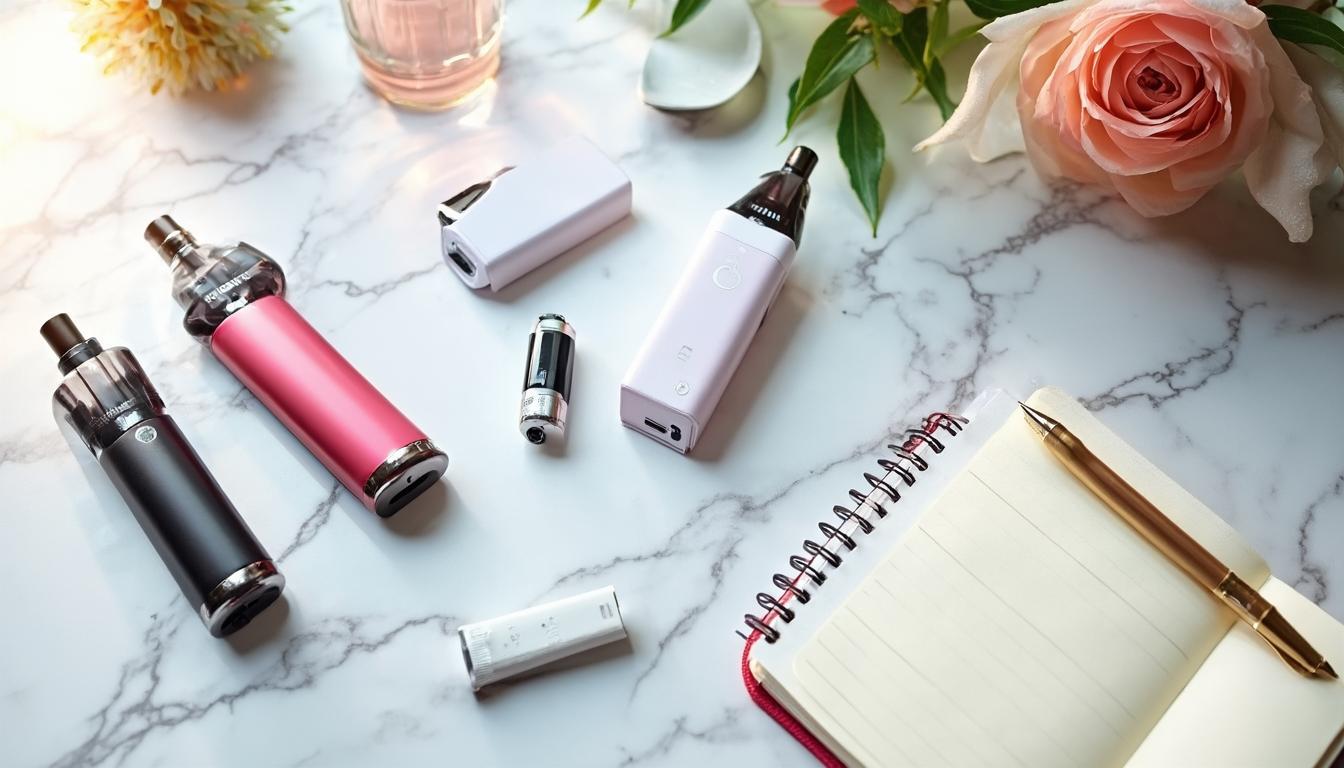

The real dangers of counterfeit e-cigarettes: a comprehensive analysis of fake vape risks, safety and illegal vapes
Among young people, e-cigarettes seem to be a trendy product with an “easy puff”, but the fake vape risks behind counterfeit e-cigarettes are far beyond imagination. Whether you are concerned about personal safety or want to stay away from illegal vapes, this article will use the most intuitive data and cases to tell you: fake cigarettes are not just “substantial” but a direct gamble on your health.
📊 Key Metrics Comparison
💡 Core Highlights and In-depth Analysis
01. Counterfeit e-cigarettes are not “almost” but have completely different risk levels
According to scientific research data, fake vape risks are far beyond most people’s imagination. Research by UC Davis directly quantifies that the metal exposure of some disposable e-cigarettes is higher than that of traditional cigarettes. Some devices even emit lead emissions equivalent to smoking nearly 20 packs of cigarettes in a day. Add illegal nicotine doses and unknown additives, and you are inhaling not just “e-liquid” but a complete set of highly concentrated poisons. In other words, when you randomly buy a cheap-looking illegal vapes on social media or from a friend, you are actually throwing yourself into an experiment with no upper limit and no undo button.
02. Teenagers’ misjudgment of “security”: they think they can tell the difference but there is no evidence
Qualitative interviews in California and Stanford show that many teenagers aged 13-17 firmly believe that they can judge whether a product is fake by “looking at the package” or “taking a few puffs and feeling it”. They will use “bubble test”, “color depth” and “smooth taste” to do so-called safety checks. But real laboratory tests tell us: heavy metals and toxic diluents are often waiting in “normal”-looking e-liquids and cannot be found at all unless you send the liquid into a mass spectrometer. There is a huge gap between the superficial empirical judgment and the actual toxicology. This is also the most difficult part of fake vape risks to detect – just because you can’t feel it doesn’t mean it doesn’t exist.
03. “You can’t avoid fake cigarettes” mentality: Price sensitivity makes risks a daily occurrence
Research has found that many teenagers and young people are in a very real dilemma: they have limited budgets, are too young to buy them through formal channels, and the illegal vapes provided by peers or micro-businesses seem cheap and convenient. Over time, they will develop a mentality of “they are all smoking anyway” and “have no choice but to use it”, and their sensitivity to safety will continue to decrease. What’s even more dangerous is that once you become dependent on it, it’s difficult to stop even if you know it’s a fake. This further amplifies the already high fake vape risks from occasional attempts to high-frequency exposure.
04. Industry Insights: The counterfeit chain is upgrading from “making quick money” to a mature black supply chain
Data from British Trading Standards to US Customs shows that illegal vapes are no longer scattered workshops but a cross-border chain with a high degree of division of labor: there are factories responsible for counterfeit packaging, channels dedicated to buying popular brand appearance molds, and design teams that “fine-tune” logos according to different national regulations. This kind of industrialized production of counterfeit goods makes it almost impossible for ordinary consumers to identify genuine and counterfeit goods based on their appearance. If companies and regulatory authorities still use the traditional “single-point law enforcement” approach to deal with it, they will often only be able to see the end vendors but not the source.
05. Industry Insights: Supervisory “authorization information” can easily be misinterpreted as “security endorsement””
Multiple surveys of adults and teenagers have shown that as long as they see words like “passed review by an agency” or “registered” on the packaging, many people will automatically interpret it as “this product is safe.” But the reality is that the US FDA, for example, does not “approve” any tobacco product as safe but only decides whether certain products can be sold legally within the existing framework. Counterfeit and illegal vapes will deliberately use these words to omit and even imitate the QR code page to induce consumers to mislead consumers into thinking about safety. This kind of “speech-based fraud” is particularly misleading to users who search for fake vape risks.
06. Industry Insights: The future trend will move from “anti-counterfeiting” to “verifiable” and “traceable””
Simply adding anti-counterfeiting labels to packaging is no longer enough. The industry has begun to try to digitize the supply chain, such as using serial numbers + blockchain to record production and circulation links, and cooperate with official or third-party verification portals to help ordinary users quickly eliminate illegal vapes. The challenge is that the front-end experience must be minimalist, otherwise users will not bother to check it, and it must avoid directing traffic into a closed loop of brand marketing to allow minors to interact more with tobacco or nicotine brands. A truly mature solution should be: the verification portal is hosted by a public or neutral platform, and the verification results only give safety-related information such as “suspected fakes/compliant sales channels” without any hint of “good” or “recommended” products.
If you really care about your safety, you can no longer underestimate fake vape risks, nor treat illegal vapes as “harmless shortcuts.” From health to law, from individuals to industries, every puff of counterfeit e-cigarettes is overdrafting the future. Establish a clear risk education and identification strategy for yourself or your brand now and take the decision-making power back into your own hands.
Experience professional counterfeit prevention and risk communication solutions →